


 57 minutes ago
1
57 minutes ago
1
ADVERTISE HERE
Third of Seven-Part Series
Challenges: Sibu shipbuilding faces a defining test as industry looks to its next chapter
SIBU has many of the ingredients that have helped make it one of the country’s important shipbuilding centres. Its river, workforce, experience and long-established network of supporting businesses have given the industry a foundation that few places can easily replicate.
But beneath Sibu’s impressive export figures and growing international reputation, the industry faces a number of challenges that could determine whether it remains a regional shipbuilding centre or gradually loses ground to its competitors.
The industry is confronting challenges that cannot be ignored – rising material costs, shortages of skilled workers, the need for technological upgrading, logistical limitations and competition from shipbuilders greater economies of scale.
These are not merely obstacles facing individual shipyards. They could determine the future direction of an industry that has become an important part of Sibu’s economic identity.
The story of Sibu shipbuilding, therefore, is not only about how an industry was built. It is also about whether it can reinvent itself before the advantages that once made it competitive begin to lose their edge.
The first challenge is geography.
Sarawak Association of Maritime Industries’ (SAMIN) President, Dr Renco Yong, a professional engineer, noted that Sibu’s shipyards are located along a river system rather than an open coastline.
“The Rajang provides access to the sea, but its physical characteristics impose limitations on the vessels that can be built and delivered.
“River depth restricts draught, while bridges impose air-draught limitations. As a result, Sibu cannot simply follow coastal shipbuilding centres into the construction of ever-larger vessels. Vietnam, for example, can build much larger ships because of its direct access to the sea,” he said.
For Sibu, the river is therefore both an asset and a constraint.
It created the conditions for a shipbuilding industry to flourish, but it also defines the boundaries within which that industry must compete.
The second challenge is less visible.
Sibu can build ships, but much of the industrial ecosystem required to build those ships does not exist locally.
“Sarawak does not have a large manufacturing base producing steel specifically for the shipbuilding industry,” said Yong.
Shipyards therefore have to source steel and other materials from Indonesia, Japan, South Korea and China, while some supplies also come through Singapore and Kuala Lumpur.
This means a significant part of the value chain lies outside Sarawak.
The town can turn imported steel into an exportable vessel, but the upstream industries that produce much of the material are elsewhere.
That represents a missed opportunity if Sarawak wants to develop shipbuilding into a truly integrated maritime industry.
Then there is perhaps the most difficult challenge of all: people.
Ships may be constructed from steel, but a shipyard’s competitiveness ultimately rests on the people who can design, weld, supervise, engineer, inspect and manage the construction process.
And skilled people are increasingly difficult to retain.
Yong said the industry faces a persistent manpower shortage, particularly when it comes to specialised and experienced workers.
Sarawak’s proximity to Singapore and Brunei makes the problem more acute because companies there can offer higher salaries.
“Many companies from Singapore also come to Sarawak to recruit our workers. This makes it very difficult for us to retain experts and skilled personnel in the state,” he said.
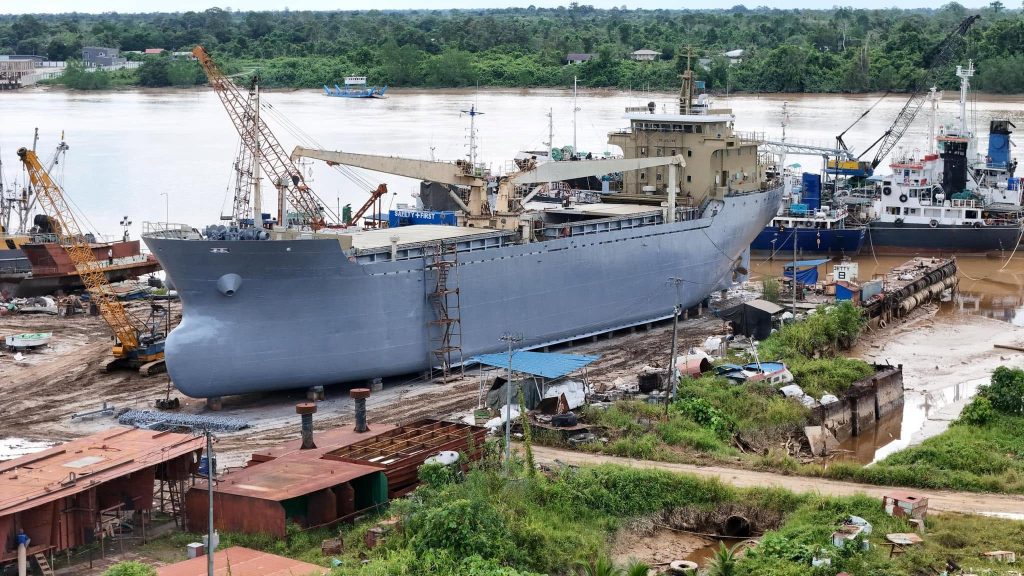 A vessel is nearing completion at Gimhwak shipyard.
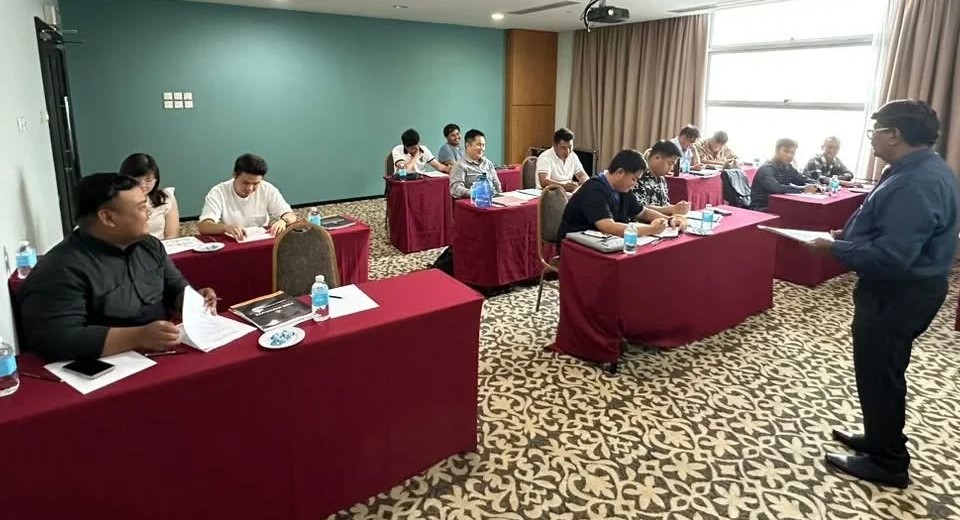 SAMIN organises a number of courses such Occupational Safety and Health Coordinator (OSH-C) Training.
The paradox is that Sarawak produces skilled workers whom other markets are willing to pay more to employ.
But there is another side to the story.
Some Sarawakians who have spent years working in Peninsular Malaysia, Australia, New Zealand or Singapore eventually return home.
The reasons are often personal rather than financial.
Ageing parents, family responsibilities and the desire to return home can outweigh the attraction of a higher salary abroad.
That offers Sibu a potential advantage that cannot easily be measured in ringgit: its ability to attract experienced Sarawakians back home.
But relying on personal ties alone cannot solve a structural manpower shortage.
The industry will need to make shipbuilding an attractive long-term career for a new generation.
That brings the story to another transformation already taking place inside Sibu’s shipyards.
Technology.
Yong said the difference between shipbuilding today and 30 years ago is substantial.
Much of the work was once performed manually, relying heavily on manpower.
When he returned to Sibu about 20 years ago after completing his tertiary education in Australia, he recalled seeing workers operating without the protective equipment and safety practices expected today.
The modern shipyard is a different environment.
Equipment has become more sophisticated. Construction methods are more systematic. Safety standards have improved.
Automation is now beginning to change the production process itself.
Robotic systems can position and align materials, perform welding and machining, and use laser inspection to identify errors.
Tasks that once required workers at several stages can increasingly be handled by machines.
Yong described a process in which raw materials can be loaded onto automated equipment, with cutting, cooling and marking carried out with minimal human intervention.
The operator loads the material at the beginning and collects the finished product at the end.
The transformation is not simply about reducing manpower.
It is about increasing precision and allowing Sibu’s shipyards to meet more demanding international standards.
The more sophisticated the customer, the greater the pressure to modernise.
Vessels built for major oil and gas companies or customers in the Middle East, for example, can require higher standards than vessels intended for less demanding markets.
Technology therefore becomes both a necessity and a gateway.
Investing in advanced machinery allows a shipyard to meet higher standards.
Meeting those standards allows it to compete for higher-value contracts.
And winning those contracts provides the incentive to invest again.
That cycle could determine whether Sibu remains primarily a builder of smaller vessels or gradually moves further up the maritime value chain.
Government support could also accelerate the process.
Yong said various grants and assistance programmes are available through government agencies, but companies often have to actively search for them and apply.
The challenge is ensuring that information about such programmes reaches Sarawak’s industry quickly enough for companies to act.
For an industry requiring heavy capital investment, timing matters.
Shipyards must constantly invest in machinery, technology, safety, skills and compliance simply to remain competitive.
The future therefore depends on more than the number of vessels ordered each year.
It depends on whether Sibu can deepen its supply chain, retain skilled workers, adopt advanced technology and overcome the physical limitations imposed by its riverine location.
Another challenge facing Sibu’s shipbuilding industry is ensuring that its workforce is ready for the technological changes ahead.
As shipyards introduce more automation, robotics, artificial intelligence and other advanced technologies, there could be a perception that machines will eventually replace large numbers of workers.
Yong, however, believes the reality will be very different.
While some workers will need to acquire new skills to operate and manage advanced technologies, he said the majority of shipbuilding work would continue to require human hands.
“Actually, most of the technical skills are still needed. Only a small percentage – I would say less than 10 per cent – will involve advanced technology skills, such as using AI, cloud technology, automation and robotics,” he said.
“These are the people who need to know how to operate all these advanced technologies.
“But the rest of the physical work still needs to be done by workers. There are many tasks that cannot easily be replaced by machines, even though more machinery is being introduced into the industry.
“Cleaning, painting, welding and assembly still require human workers.”
The difference, he explained, lies partly in the sheer size and complexity of a ship.
Unlike automobile manufacturing, where components can be assembled in a controlled environment and moved along a production line, shipbuilding involves working on massive structures with constantly changing conditions.
“For a car, it is relatively easy to automate the assembly process because it is small and the components can be fitted together in one place. I have heard that a car can go through 50 to 60 robotic arms from the beginning of the assembly process to completion.
“But a ship is much bigger. In the future, perhaps more components can be manufactured or assembled using robotic arms, but not in the next 10 or 20 years to the extent that everything can be automated.
“When it comes to the final assembly, alignment and fitting of components, a lot of the work still has to be done by humanism,” he said.
The shipyard environment itself also presents difficulties for automation.
“Cleaning is another example. Robots work best in a controlled and clean environment with a relatively flat surface. A shipyard is very different. There are waste materials and rubbish on the floor, and the working environment is constantly changing,” Yong said.
Painting presents a similar challenge.
“Painting is also difficult to automate completely because ships have many different surfaces, structures and spaces. There are walls, floors and many frames and compartments.
“So blasting and painting will still require manpower.”
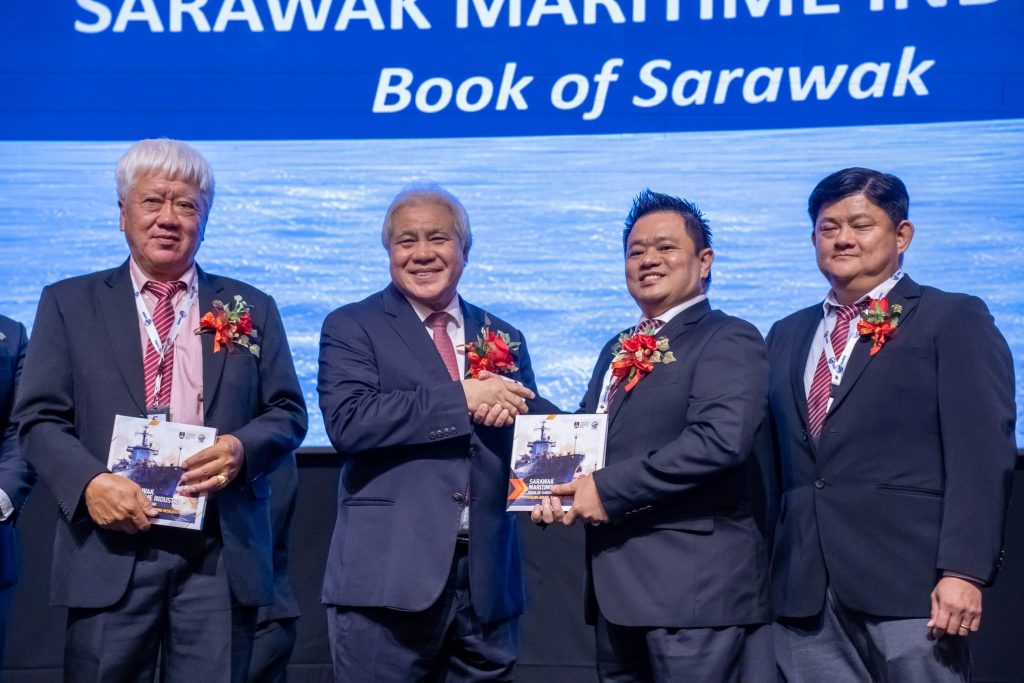 Yong (second right) presents Minister of International Trade, Industry and Investment, Datuk Amar Awang Tengah Ali Hassan, with SAMIN’s ‘Book of Sarawak 2nd Edition’.
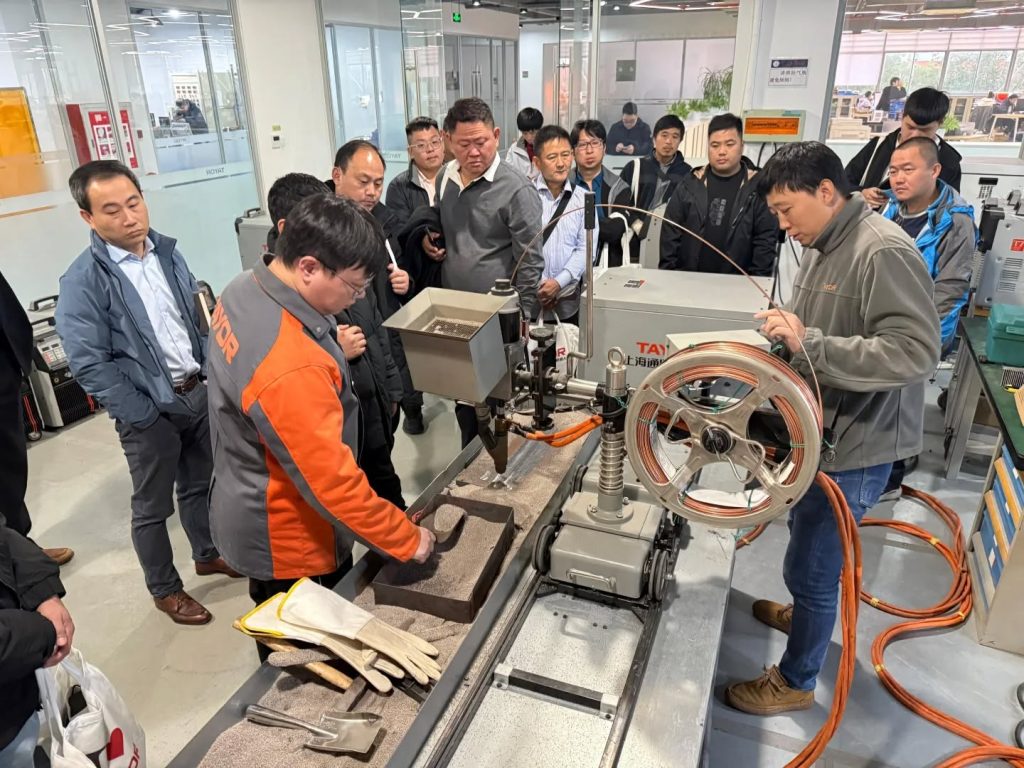 SAMIN members visit Shanghai General Heavy Industry Group to acquire useful insights into welding systems, robotics, and modern equipment solutions supporting shipbuilding, offshore engineering, and industrial automation.
For Sibu, therefore, the challenge may not be about replacing workers with machines, but ensuring that workers can work alongside them.
“I would say that the majority of the work will continue to be done by humans. Only less than 10 per cent of the workforce may need to be re-educated or retrained in advanced technologies,” Yong said.
That could offer some reassurance to an industry already grappling with manpower shortages. Rather than making human workers obsolete, automation could change the skills they need — with a relatively small segment of the workforce requiring specialised training in emerging technologies, while the majority continue to rely on traditional shipbuilding expertise.
For Sibu’s shipyards, the challenge will be to preserve that pool of experienced craftsmen while ensuring that a new generation is equipped to work in an increasingly technology-driven industry.
The foundations are already there. The international customers are there. The shipyards are there. The experience is there. And the orders continue to come.
But Sibu’s next phase of development will require more than building ships. It will require building the ecosystem around them.
That means developing more local suppliers, strengthening technical education, retaining skilled workers and encouraging investment in automation and advanced manufacturing.
The Rajang will remain at the centre of Sibu’s shipbuilding story. But the industry’s future cannot depend on the river alone.
For decades, the river carried Sibu’s boats out into the wider world.
Now the challenge is to ensure that the economic value created by those vessels flows back into the town — creating skills, businesses, technology and opportunities capable of sustaining the industry for another generation.
From tugboats bound for Indonesian waters to vessels destined for operations in West Africa, Sibu has already demonstrated that a ship built along the Rajang can find a place in the global maritime economy.
But sustaining Sibu’s shipbuilding success will require more than preserving what it has built. The next test is whether the town can build the industrial ecosystem to propel its shipyards into the coming decades — and into the era of green energy.






 English (US) ·