


 1 hour ago
3
1 hour ago
3
ADVERTISE HERE
KUCHING: Artificial intelligence can help produce news, generate videos and turn ideas into content within minutes. But when everyone has access to similar tools, what makes one journalist’s story different from another’s?
For Universiti Malaysia Sarawak’s (UNIMAS) lecturer Syahrul Nizam Junaini, the answer is authenticity. Something that cannot simply be generated by entering a prompt.
He believes journalists must continue doing what technology cannot do on their behalf: meet people, conduct interviews and travel into communities, including rural parts of Sarawak, to find stories that bring news to life.
“The key is authenticity. For example, there is content that can only be obtained when we interview and meet the subjects. AI cannot generate that.
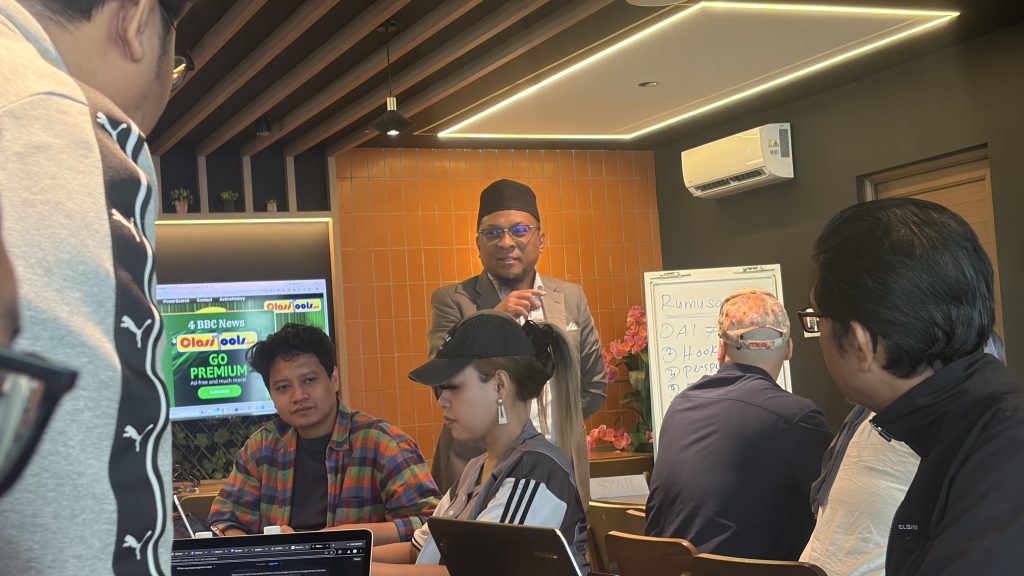 Syahrul lectures reporters during a recent workshop.
“Journalists are still needed. Journalists need to interview people, go into the interior of Sarawak and obtain stories.
“Those are the stories that make news more alive compared with AI-generated content”, he told Sarawak Tribune in an interview.
His point offers a useful way to look at the growing use of artificial intelligence in journalism. As the technology becomes more accessible, the ability to produce content quickly may no longer be enough to distinguish one newsroom from another.
What matters is the reporting behind the finished product.
Human element in digital storytelling
Syahrul shared his views during a digital storytelling workshop for about 40 reporters and editorial staff from Sarawak Tribune and Suara Sarawak recently.
The workshop focused on storytelling through news and feature writing, as well as AI-assisted video production. Rather than treating storytelling as something confined to conventional writing, Syahrul introduced participants to ways digital tools could make stories more engaging.
“Storytelling is not something rigid. It becomes more interesting when we have AI video and AI-generated news,” he added.
He also pointed to the importance of visual communication in an era dominated by television, computers and mobile phones.
In the past, stories were often passed down through spoken accounts, including those shared by older generations.
Today, audiences encounter information across a range of screens and digital platforms, making visuals an important way to communicate a message.
“We live in a visual age rather than an age of listening,” he said, adding that visual content could help journalists reach their intended audiences and make content easier to produce.
For newsrooms, this presents opportunities to tell stories through short-form videos, audio, graphics and social media, rather than relying exclusively on written reports.
But the availability of these tools does not remove the need for journalists to decide what deserves to be told, whose voices should be heard and what information audiences need to understand an issue.
Going deeper in less time
Digital platforms also create a difficult balancing act for storytellers: how can a story remain meaningful when audiences may not have the patience to consume lengthy content?
Syahrul acknowledged that producing something both short and detailed was a challenge.
“If you want it to be deeper, but short, that’s not easy.
“If you make it long, participants or viewers may quickly lose focus or become bored,” he said.
The answer, he argued, lay in finding a balance between depth and duration, particularly when producing videos.
This requires journalists to make careful decisions about what to include, what can be left out and how to present the central message without losing the substance of the story.
A shorter format may help attract attention, but brevity alone does not guarantee effective storytelling.
Equally, a longer piece does not automatically become more meaningful simply because it contains more information.
The judgement needed to strike that balance is where human experience remains important.
Syahrul said the decision should be left to the wisdom and experience of the human reporter, rather than being handed entirely to AI.
For journalists, this means understanding both the subject and the audience before deciding how a story should be presented.
Technology can assist with production but it cannot automatically determine the right balance for every story.
Why journalists cannot hand everything to AI
Beyond questions of authenticity and storytelling, Syahrul warned that relying entirely on AI carried risks, particularly when it came to accuracy.
One of the biggest concerns is “AI hallucination”, in which a system produces information that may sound convincing but is not necessarily correct.
He said journalists must not assume that information generated by AI was accurate simply because it was presented confidently or in polished language.
“AI will try to provide the best information, but that information is not 100 per cent accurate.
“ You are still have to double-check and triple-check many times before publishing”, he said.
For journalists, that means verifying information against reliable sources and checking details before they reach the public.
AI-generated material should not be treated as a substitute for proper reporting and editorial checks.
The risks become especially serious when incorrect details are published as facts.
A tool may speed up production, but the journalist and newsroom remain responsible for the accuracy of what they publish.
This is why Syahrul’s approach to AI is not about rejecting the technology, but using it alongside human judgement.
He said the workshop did not teach AI as a standalone solution. Instead, it linked the technology to storytelling, with the aim of combining its capabilities with the journalist’s own thinking.
“With AI plus the journalist’s own brain, we combine the two and the result is better.
“The only condition is, don’t hand it over 100 per cent to AI,” he said.
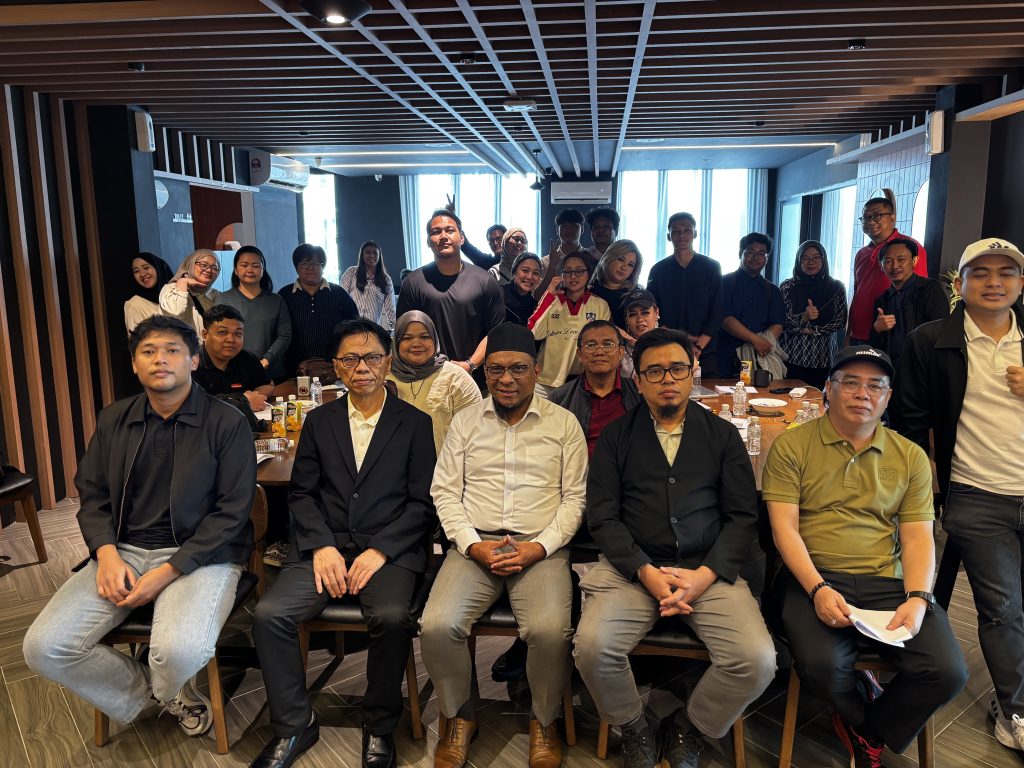 Reporters and editorial staff from Sarawak Tribune and Suara Sarawak pose with Syahrul after the digital storytelling workshop.
As AI becomes a more familiar part of content production, that distinction is worth remembering.
The technology can help journalists create and present material in new ways, but it cannot replace the interviews, fieldwork and judgement that give a story its substance.
In the end, the real advantage may not belong to the journalist who uses AI the fastest, but to the one who knows what is worth reporting and does the work to find out.







 English (US) ·