


 56 minutes ago
4
56 minutes ago
4
ADVERTISE HERE
By the time I arrived in Helsinki, I had already spent many hours in transit. The journey from Kuala Lumpur to Europe was long, with London serving mainly as an overnight stopover.
Airports, however, have a way of blurring time. There are boarding calls, luggage, waiting lounges, meals at odd hours, and the peculiar feeling of being physically awake while your body seems to be in another time zone.
After all that movement, Helsinki felt almost like a pause, a welcome one.
My first impression of Finland was one of calm. The city did not seem to be in a hurry to impress. It felt clean, orderly, and composed, and after the long journey, that quietness was welcome. There was a certain restraint to the surroundings, something understated that made me want to slow down rather than rush from one attraction to another.
On that first evening, we left the city atmosphere behind and headed to Stansvik Manor, a manor house surrounded by a lake and an apple orchard for an outdoor barbecue. It was a gentle introduction to the country. The setting was peaceful, with open space, water and greenery creating a sense of ease after hours spent inside the aircraft and airports. Sometimes the smallest change of environment can shift the mood completely, and that evening did exactly that.
Later, we went on a boat trip to watch the sunset and, if we were fortunate, to catch a glimpse of the aurora borealis.
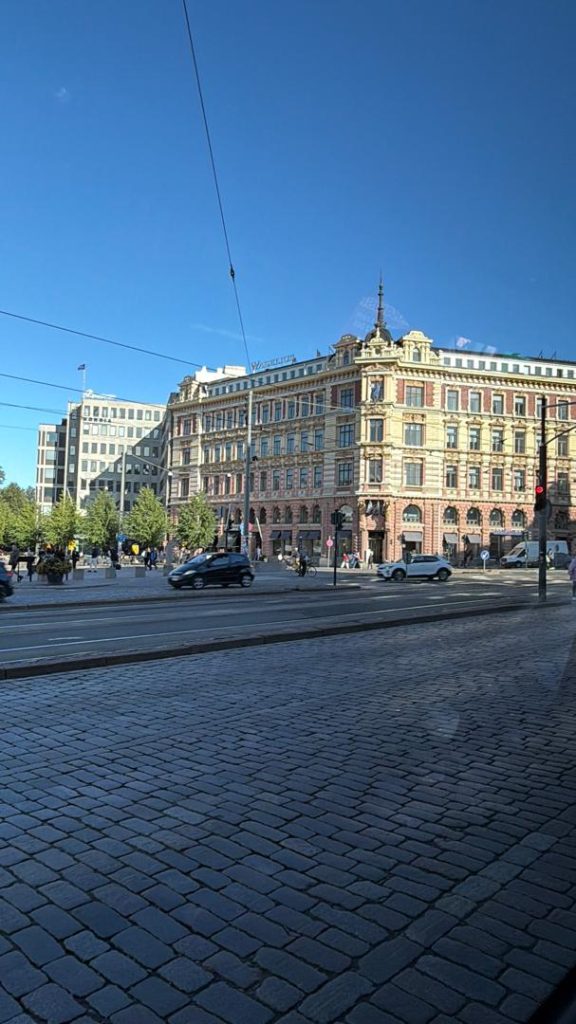 A view of a building in Helsinki, Finland
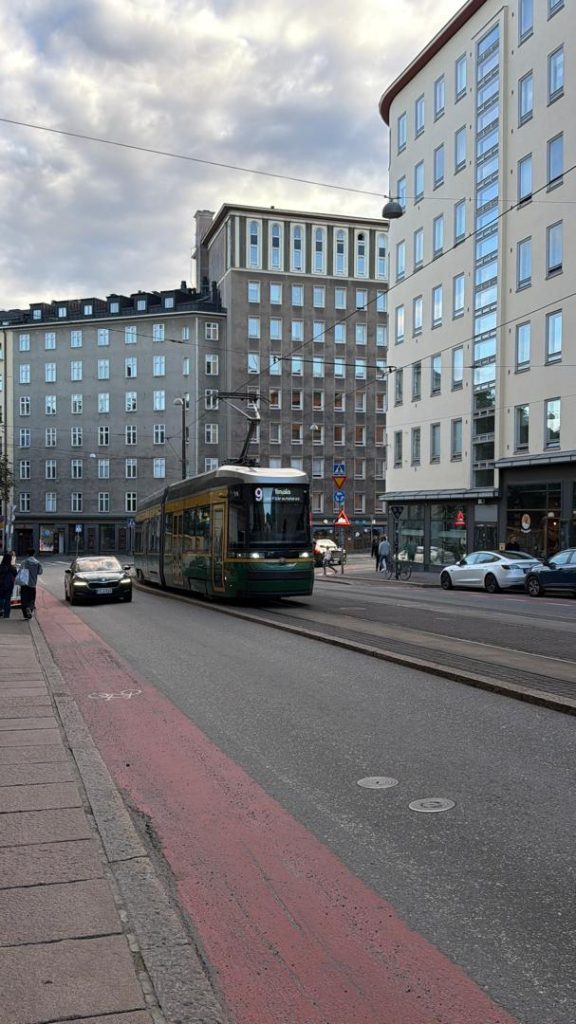 Typical modes of transportation in Finland: trams and cars.
The Northern Lights had naturally been something to look forward to. There is an almost mythical quality to them, especially for someone coming from a part of the world where they are not part of the night sky. I imagined the colours appearing above us and turning the evening into one of those unforgettable moments that people travel across continents to experience.
Unfortunately, the aurora did not appear.
There was a brief sense of disappointment, of course. Yet after a while, I realised that the evening had not become any less beautiful. The lake was still there. The cool air was still refreshing. The sunset still gave the landscape its own quiet glow. The absence of the aurora did not erase the experience.
If anything, it made me more aware of how much expectation shapes the way we travel.
We often travel with a list of things we hope to see. We imagine the perfect weather, the perfect view and the perfect photograph. But nature does not perform on request. That evening was a simple reminder that some of the most memorable moments are not always the ones that turn out exactly as planned.
The following morning, we travelled to Porvoo, the second-oldest city in Finland, which took around an hour’s drive from Helsinki. If Helsinki represented the calm modern face of Finland, Porvoo seemed to offer something older and more intimate. It had a quiet charm that made it immediately likeable. The atmosphere felt slower, softer and more personal than that of a capital city.
Porvoo was not overwhelming in scale, and perhaps that was part of its appeal. It was the kind of place where one could simply walk, observe and enjoy the surroundings without feeling the need to rush. There was a sense of history in the architecture and a certain warmth in its older character. It showed a different side of Finland, one that felt connected to the past without seeming frozen in it.
That contrast between old and new was what I found most interesting. Helsinki felt contemporary, efficient, and composed. Porvoo felt gentler and more rooted in history. Yet the two did not seem to contradict each other. Instead, they appeared to complement one another, showing how a country can move forward without completely losing the character of what came before.
After Porvoo, the day took an unexpected turn. The original programme included more sightseeing in Helsinki, but instead we travelled to the Parola Armour Museum, or Panssarimuseo, located about an hour’s drive from the city.
I was particularly interested in the visit because I have long been fascinated by tanks and armoured vehicles. Part of that interest came, rather unexpectedly, from watching an anime series centred on high school girls competing in tank-based tournaments. What began as entertainment had made me curious about the machines themselves, so the opportunity to see real tanks up close immediately appealed to me.
At first, I did not expect the museum to become one of the strongest memories of my time in Finland. Yet it did.
The drive itself was part of the experience. Outside the city, the Finnish landscape remained calm and orderly. The roads were quiet, the surroundings peaceful, and the countryside almost serene. There was little in the landscape to suggest conflict or turmoil. That made arriving at a museum filled with tanks and armoured vehicles feel even more striking.
At first, the machinery commanded attention simply because of its size and design. Tanks are imposing objects. They carry a physical weight and presence that are impossible to ignore. One can admire the engineering, the structure and the technology, but after a while, it becomes difficult to see them only as machines.
A tank exists because of conflict. It is created for defence, for protection, for warfare and for survival. Behind every armoured vehicle is a story that is not only mechanical but human. There are soldiers, families, communities and generations who lived through the circumstances that made such machines necessary.
That thought changed the way I saw the museum.
The Finland I had experienced outside was peaceful. Helsinki had been calm. Porvoo had been charming. The manor house by the lake had felt almost idyllic. Yet inside the museum were reminders that peaceful countries are not places without difficult histories.
That contrast stayed with me.
Travel often encourages us to look at what is visible in the present. We see modern buildings, clean streets, beautiful landscapes and comfortable public spaces. We take photographs of what stands before us and rarely stop to think about what earlier generations may have experienced in the same country.
The museum made that history feel closer.
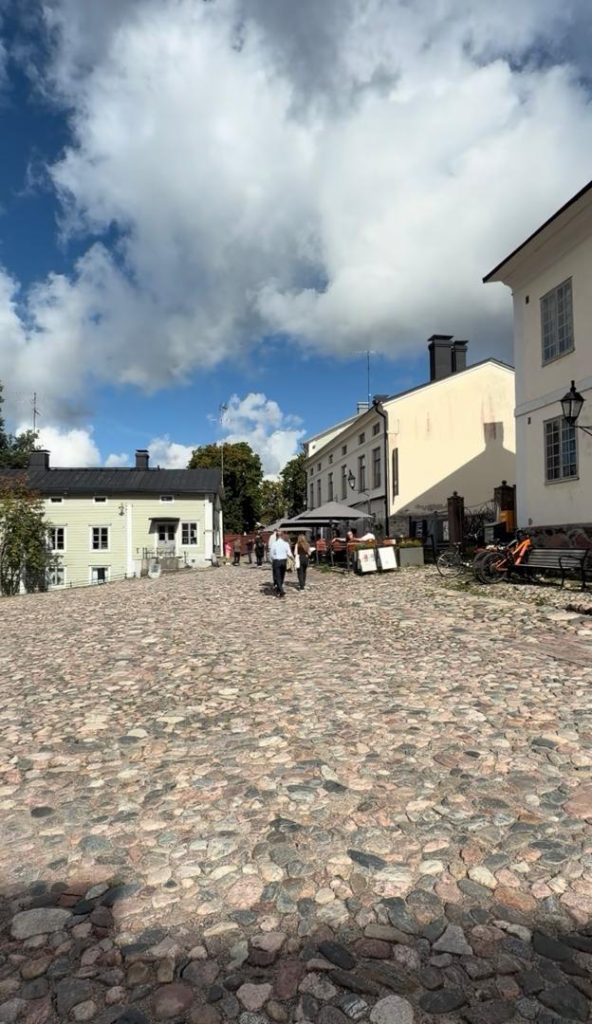 Cobblestine road of Porvoo
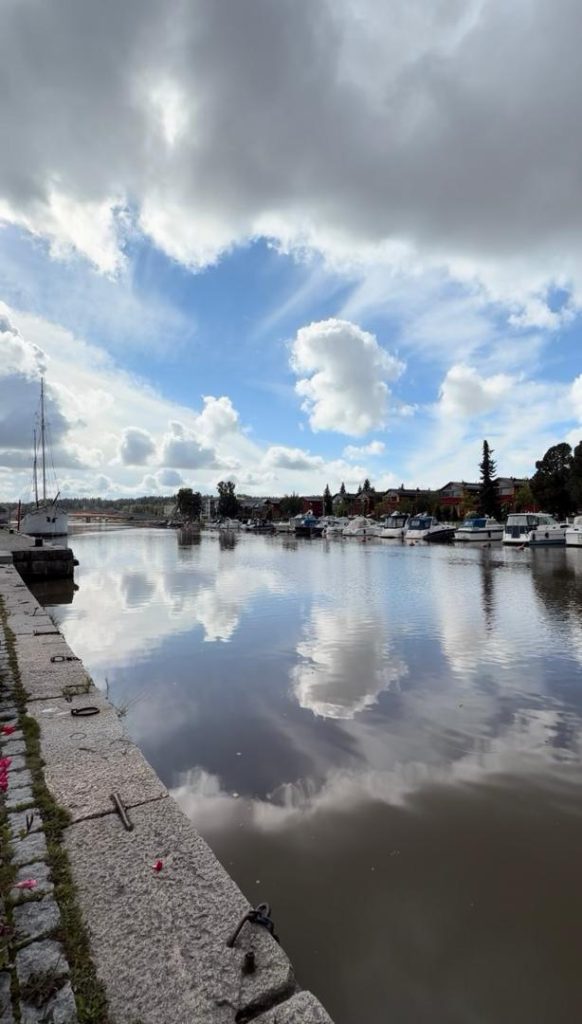 A view of the Porvoonjoki (Porvoo River)
It also made me think about how easily peace can become something we take for granted. When life is stable, we plan ahead without thinking much about it. We assume that tomorrow will arrive normally. We make appointments, plan journeys, and become frustrated by delays or changes in schedule. Yet for people who have lived through war, uncertainty has a very different meaning.
Standing among tanks preserved as museum exhibits, I was struck by the privilege of encountering war as history. For many people, war is not something they learn about in a museum. It is part of their memories, their families or their daily lives.
That realisation gave the visit a deeper meaning.
It also changed the way I thought about the rest of the day. A missed aurora suddenly seemed small. A change in programme seemed insignificant. Even the tiredness of travel felt different when placed beside the larger history represented by the museum.
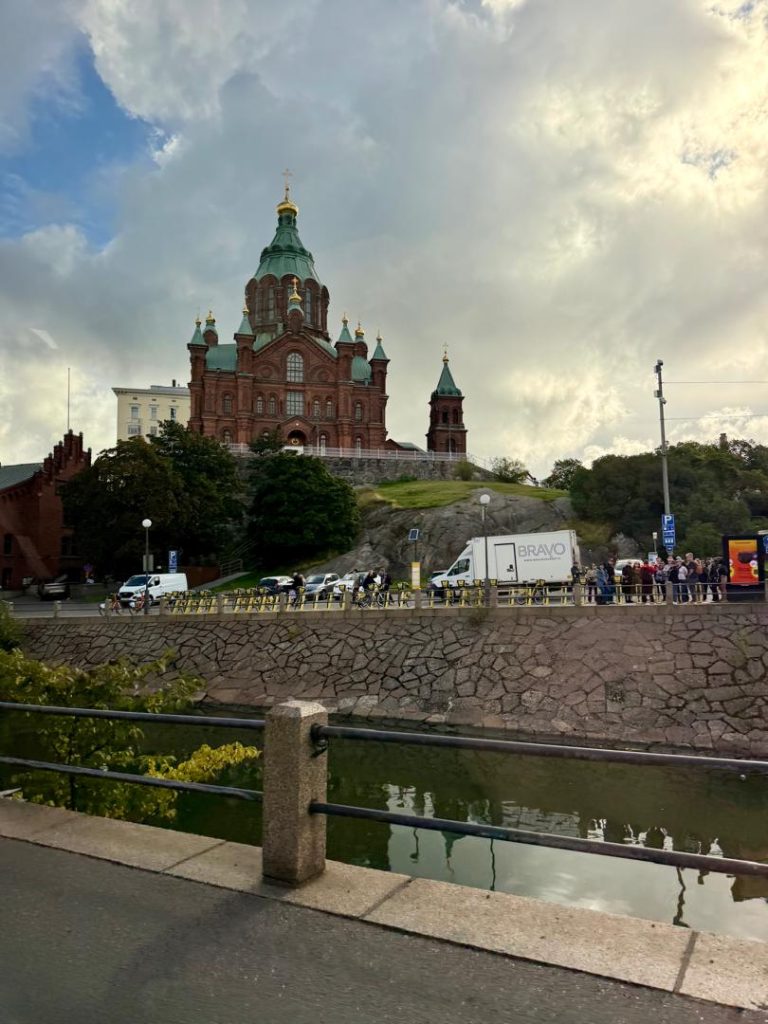 Uspenski Cathedral, a prominent Eastern Orthodox landmark on Helsinki’s Katajanokka peninsula.
Sometimes travel teaches us through beauty. Sometimes it teaches us through contrast.
Finland did both.
There was beauty in the lake, the sunset, the quiet roads, and the charm of Porvoo. There was a contrast in the stance of the military vehicles after spending the morning in peaceful surroundings. The country seemed to hold both things at once: a calm present and a history that had required strength.
The lighter parts of the journey remained important too. During our time in Helsinki, we ate food from different cultures rather than focusing only on Finnish cuisine. One meal was at Omo Omo Café, which serves West African food, while another was at Uyghur Noodle House, which offers Uyghur and Central Asian cuisine.
I enjoyed that mix. It reflected another side of modern Helsinki, one that felt connected to the wider world. A city can reveal itself not only through its architecture and landmarks, but also through the different cultures that have found a place within it.
By then, the rhythm of the journey had begun to settle into place. Travel, arrive, explore, eat, return, sleep, pack, and move again. Finland was only the beginning of a much longer journey through Europe and the Balkans, but it had already given me more than I expected.
The following morning, we left Helsinki for Bosnia and Herzegovina, travelling through Istanbul before continuing to Sarajevo. It was a long day of movement, the kind of travel day that is more about endurance than sightseeing.
As I left Finland, I realised that my strongest memories were not necessarily the ones I had expected before arriving.
I had looked forward to the aurora, but it did not appear.
I had expected more conventional sightseeing, but one of the most meaningful moments came from an armour museum outside the city.
I had thought of Finland mainly in terms of scenery, but I left thinking about history and peace.
That was perhaps what made the country memorable for me. Finland did not reveal itself in a single dramatic moment. It unfolded quietly.
The manor house and lake gave me stillness. Porvoo gave me a sense of older Finland while Helsinki gave me an impression of modern calm. As for the Parola Armour Museum? It gave me something deeper to think about. It gave me a glimpse of a wartime history with heavy armoured vehicles.
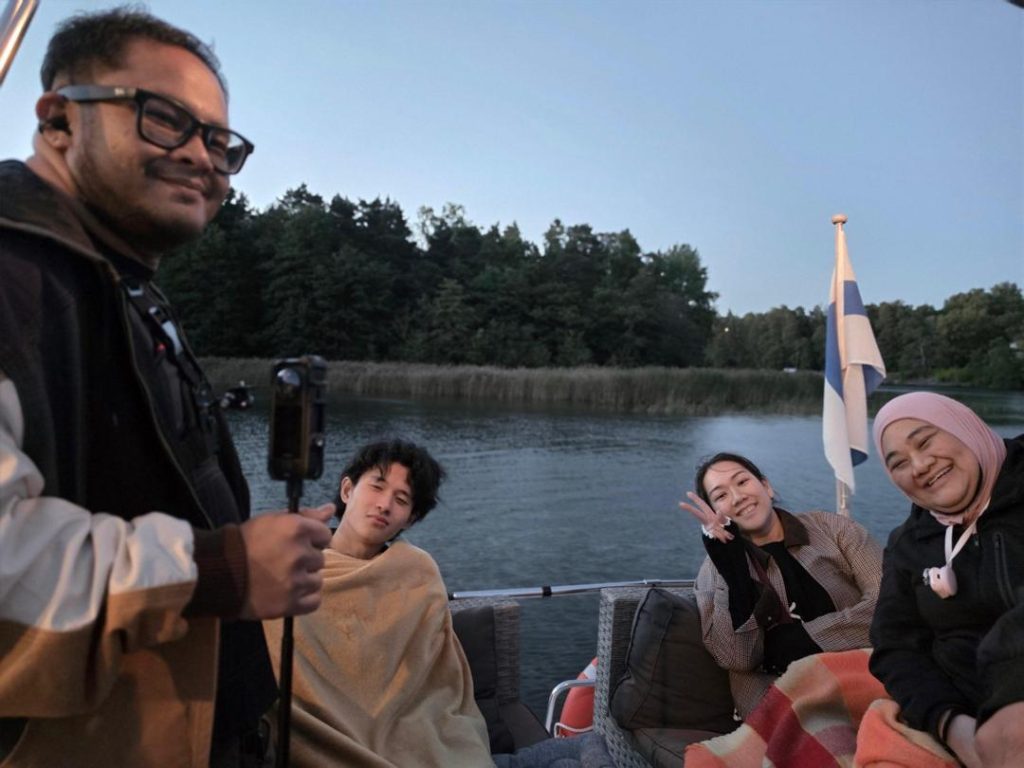 My husband, brother, sister, and I sailing on the Gulf of Finland, hoping to catch a glimpse of the Aurora Borealis; a wish that, unfortunately, was not fulfilled that evening.
Taken together, these experiences formed a first impression that was more reflective than I had expected.
Finland showed me that a place does not need to be loud to leave a strong impression. Sometimes it is the quieter destinations that remain with us longest.
And sometimes, the part of a journey we least expect to matter becomes the part we carry home most clearly.
From the quiet calm of Finland, the journey continued to Bosnia and Herzegovina, where the landscape was just as beautiful, but the history felt much closer.
To be continued in Part II: Bosnia and Herzegovina.



 English (US) ·