


 12 hours ago
5
ADVERTISE HERE
VALLADOLID, 11 Nov: The aroma lingered like perfume. Then came a question that mattered to the business behind the pepper: could they buy it in Spain?
For visitors Carmen Cacho and Estefani Estremadoyro, discovering Sarawak pepper at the Sarawak Booth in Valladolid was an encounter with a flavour they wanted to explore further.
They described its fragrance as unusually pronounced and its flavour as particularly well-suited to meat dishes.
“When I smelled it, it lingered in my nose like perfume for a long time,” said Carmen after sampling Sarawak pepper.
“The pepper had a strong aromatic presence and suggested it could appeal to the country’s high-end dining market,” the other visitor remarked.
Their interest soon moved beyond the tasting table to questions about availability, its use in restaurants and even the possibility of visiting Sarawak.
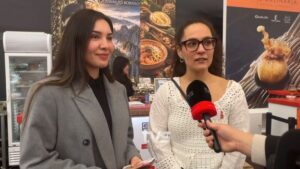 Carmen Cacho and Estefani Estremadoyro. Photo: TVS
They were particularly interested in whether it was already distributed locally. Their difficulty finding it, they said, made them curious about its potential availability.
Their response offered a useful glimpse of consumer interest, although it remains an individual assessment rather than evidence of established market demand.
The conversation also reached beyond food.
Asked whether they would like to visit Sarawak, both expressed enthusiasm — showing how an ingredient can introduce people to the place it comes from.
A journey that begins with growers
The interaction gave Truly Borneo Trading Sdn Bhd an encouraging starting point. The next task is to turn curiosity into commercial relationships — and, ultimately, sustained demand for pepper sourced from Sarawak’s smallholders.
Long before the pepper reached Spain, its journey began with farming communities in Sarawak.
Managing Director Seow Yang said the company was founded out of a desire to share Sarawak’s pepper heritage with the world. It works directly with smallholder farmers, including families who have cultivated the crop for generations.
“Our business is built on fair trade, trust, and quality.
“This approach involves working closely with growers to select ripe pepper berries, ensuring the quality of the harvest meets the expectations of international buyers,” she noted.
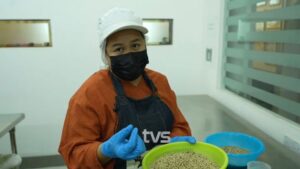 Operator Linny Aga. Photo: TVS
The relationship with farmers forms the foundation of the company’s export ambitions, while preparing the product for market involves meticulous post-harvest work.
At the processing stage, operator Linny Aga demonstrated how white pepper is inspected and sorted, with foreign material such as twigs, stones and wood fragments removed.
Darker peppercorns are separated for grinding into powder, while those meeting the selection requirements proceed to the next stage, which she described as baking, before sale.
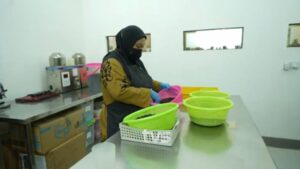 “Darker peppercorns are separated for grinding into powder, while those that meet the selection requirements proceed to the next stage, which she described as baking, before being sold. Photo: TVS
It is painstaking work with a practical purpose: ensuring the finished product meets the required specifications.
For an overseas buyer, that consistency will matter alongside the first impression of aroma and flavour.
A distinctive introduction to Sarawak
At the Sarawak Booth during the World Tapas Championship in Valladolid, Truly Borneo presented its True Pepper range, including carefully sorted black and white Sarawak pepper.
 Seow Yang attends to a curious visitor who enquires about Sarawak pepper in detail. Photo: TVS
Seow described its distinguishing qualities as a combination of floral and woody aromas, with a clean, sharp heat that complements a dish without overwhelming it.
“Each batch undergoes strict quality control and careful processing.
“Those qualities became a talking point among visitors encountering the products in Spain,” she said.
Spanish chefs see possibilities on the plate
The pepper also drew attention from Spanish restaurant professionals.
Carlos Garcia Moreno of Dexcaro restaurant in Dénia praised Sarawak black pepper for its distinctive aroma, flavour and heat, encouraging others to try it and learn more about it.
 Carlos Garcia Moreno of Dexcaro. Photo: TVS
Alex De La Fuente of In-Pulso restaurant likewise found it more aromatic and flavourful than the peppers he usually uses in Spain.
For Alex, its appeal extended to how it could work in his cooking.
 Alex De La Fuente of In-Pulso. Photo TVS
“It can be used with both fish and meat,” he said.
He believed the pepper could enhance the flavour of the main ingredient, suggesting a role for it in dishes beyond Sarawak’s own culinary traditions.
That distinction is commercially significant. An ingredient’s prospects abroad depend partly on whether chefs can find a place for it in the food they already prepare, as well as in new dishes.
The chefs’ reactions suggest avenues worth exploring. Whether those possibilities lead to purchases and repeat orders will depend on the business discussions that follow.
Turning attention into trade
For Truly Borneo, the purpose of being in Valladolid extends beyond introducing visitors to a distinctive spice.
Seow said the company hopes to establish partnerships with specialty food importers, gourmet distributors and businesses in the hotel, restaurant and catering sector.
Its supply chain, packaging and export documentation are ready to support international distribution, Seow added.
The company sees Spain as a potential entry point to the wider European market, with ambitions to position Sarawak pepper as a premium ingredient for fine dining and gourmet retail.
Achieving that will require follow-through after the event: identifying suitable partners, understanding their requirements and demonstrating the ability to deliver consistent quality.
The Sarawak Booth provides a place for those conversations to begin.
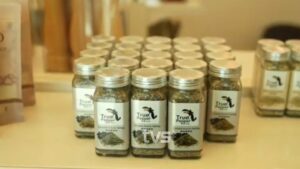 Sarawak pepper Truly Borneo. Photo: TVS
Seow said exhibiting collectively under the Sarawak banner helps small and medium-sized businesses reach international buyers and media they might struggle to access individually.
It also creates a connection between producers at home and potential customers abroad.
Seow hopes the experience will encourage other local entrepreneurs to pursue export opportunities, strengthen their quality standards and present Borneo’s food heritage with confidence.
Keeping growers connected to the opportunity
In Valladolid, the immediate response was sensory: a lingering fragrance, a distinctive taste and a chef imagining how the pepper could complement fish or meat.
 Valladolid, country in Spain and home of gastronomy. Photo TVS
Back in Sarawak, the foundations of that experience lie in the harvest and the careful sorting process that prepares the pepper for sale.
The value of international exposure will ultimately depend on whether these two ends of the journey remain connected.
If interest develops into lasting demand, the opportunity could extend beyond the exporter to the smallholders supplying the pepper. Achieving this will require dependable sourcing relationships alongside successful sales.
For now, Sarawak pepper has sparked curiosity, drawn praise and opened conversations in Spain.
The next chapter will be shaped by partnerships and repeat orders, carrying the promise of a tasting table in Valladolid back to the farms where the journey began — TVS




 English (US) ·